


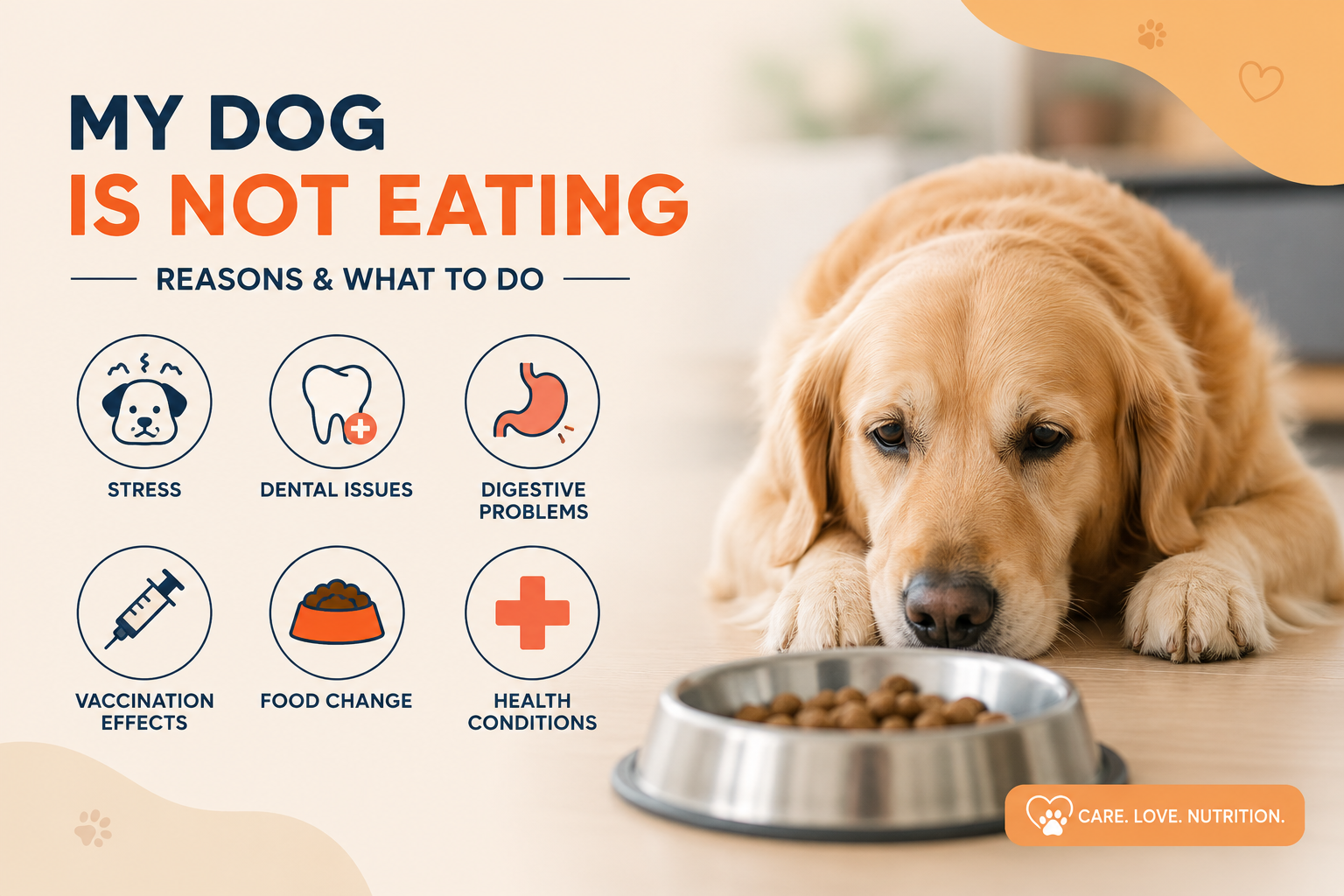
My Dog Is Not Eating — Reasons, Warning Signs & What to Do
<h1>My Dog Is Not Eating — Reasons, Warning Signs & What to Do</h1><p><em>A complete guide for worried pet parents</em></p><p>Every dog owner knows that moment of panic you set down the bowl, walk away, and come back to find it untouched. Your dog, who once inhaled food like a vacuum cleaner, is now sniffing and walking away.</p><p>Don't worry you're not alone. Loss of appetite is one of the most common concerns dog owners search for. But it's also one where <em>knowing the difference</em> between "totally fine" and "call the vet now" can make a real difference.</p><p>This guide covers everything: the real reasons dogs stop eating, what the symptoms mean, how long is too long, and practical steps you can take right now.</p><h2>Is It Actually a Problem?</h2><p>First, a quick sanity check. Dogs can skip a meal occasionally without anything being wrong. Just like humans, they have off days they're hot, they're bored, they're not that hungry.</p><p><strong>The rule of thumb:</strong></p><ul>
<li>Skipping <strong>one meal</strong> → watch and wait</li>
<li>Not eating for <strong>24–48 hours</strong> → take it seriously</li>
<li>Not eating for <strong>more than 48 hours</strong>, especially with other symptoms → contact your vet</li>
</ul><p>If your dog is acting normal in every other way playful, drinking water, no vomiting a skipped meal is usually nothing to worry about. But if they're lethargic, hiding, or clearly uncomfortable, that changes things.</p><h2>12 Common Reasons Why Dogs Stop Eating</h2><h3>1. 🤒 Illness or Infection</h3><p>Just like us, when dogs feel sick, eating is the last thing on their mind. Infections, fevers, digestive issues, and viral illnesses all cause appetite loss. It's often the <em>first</em> symptom that something is off internally.</p><p><strong>Watch for:</strong> Lethargy, vomiting, diarrhea, or unusual behaviour alongside not eating.</p><h3>2. 🦷 Dental Pain or Tooth Problems</h3><p>Imagine trying to enjoy a meal with a cracked tooth or inflamed gum. Dogs suffer in silence with dental pain, and many owners never notice until it's serious.</p><p>Bad breath, pawing at the mouth, chewing on one side, or dropping food are all signs your dog's mouth might be hurting.</p><p><strong>What to do:</strong> Check their mouth gently for swelling, bleeding gums, or broken teeth. A vet dental check is often needed.</p><h3>3. 💊 Medication Side Effects</h3><p>Did your dog recently start a new medication? Many common drugs antibiotics, anti-parasitics, vaccines, and even some supplements can cause nausea or temporary appetite loss.</p><p>This is one of the least alarming reasons and usually resolves on its own in a day or two.</p><h3>4. 😟 Stress, Anxiety, or Emotional Changes</h3><p>Dogs are deeply emotional animals. Changes in their environment hit them hard.</p><p>Common stress triggers include:</p><ul>
<li>Moving to a new home</li>
<li>A new baby, pet, or person in the house</li>
<li>Owner traveling or being away</li>
<li>Loud events (fireworks, construction)</li>
<li>Disrupted routine</li>
</ul><p>Some dogs also go through a grieving period after losing a companion human or animal.</p><h3>5. 🍽️ Boredom With Their Food</h3><p>Yes, dogs can get bored of eating the same kibble day after day. If you've been feeding the same brand for months and your dog is losing interest, they might simply be holding out for something better.</p><p>This is especially common in picky breeds like Cavalier King Charles Spaniels, Shih Tzus, and French Bulldogs.</p><h3>6. 🌡️ Hot Weather</h3><p>Dogs naturally eat less in summer. High temperatures reduce their metabolic need for calories, and their bodies instinctively reduce appetite to stay cool.</p><p>If the weather has turned hot and your dog is otherwise fine this is probably why.</p><h3>7. 🐕 Overfeeding or Too Many Treats</h3><p>If your dog gets a lot of treats, table scraps, or human food throughout the day, they may simply not be hungry at mealtimes. They've already had their calories.</p><p>Track what your dog is actually consuming in a day you might be surprised.</p><h3>8. 🧠 Cognitive Decline in Older Dogs</h3><p>Senior dogs sometimes lose their appetite due to cognitive dysfunction the dog equivalent of dementia. They may forget to eat, lose interest in food, or become confused around mealtimes.</p><p>Age-related health issues like kidney disease, liver problems, and cancer also frequently cause appetite changes in older dogs.</p><h3>9. 🪱 Parasites (Worms)</h3><p>Internal parasites roundworms, tapeworms, hookworms can cause nausea and appetite loss. They're especially common in puppies but affect dogs of all ages.</p><p>If your dog is overdue for deworming, this is worth checking.</p><h3>10. 🫃 Gastrointestinal Issues</h3><p>Stomach problems, blockages, bloating, acid reflux, or inflammatory bowel disease can all make eating uncomfortable or painful. A dog that eats a little and then stops, or keeps going to the bowl and walking away, may have digestive discomfort.</p><p><strong>Bloat is an emergency.</strong> If your dog's stomach looks distended and they are retching without vomiting, go to an emergency vet immediately.</p><h3>11. 📍 Recent Vaccination</h3><p>It's completely normal for dogs to feel a bit under the weather for 24–48 hours after a vaccine. A temporary dip in appetite is one of the most reported side effects.</p><p>If it lasts longer than two days post-vaccine, check with your vet.</p><h3>12. 🍖 Food Quality or Spoilage</h3><p>Check your dog's food. Has the bag been open for a while? Does it smell off? Dry kibble goes stale faster than most owners realise especially in warm climates. Dogs have sensitive noses and will refuse food that smells wrong to them, even when it looks fine to us.</p><h2>Warning Signs That Need Immediate Vet Attention</h2><p>Some signs alongside not eating are red flags. Don't wait call your vet if you see:</p><ul>
<li>❌ Not eating for more than 48 hours</li>
<li>❌ Vomiting repeatedly or blood in vomit</li>
<li>❌ Blood in stool or diarrhoea lasting more than a day</li>
<li>❌ Distended or hard belly</li>
<li>❌ Extreme lethargy or collapse</li>
<li>❌ Rapid weight loss</li>
<li>❌ Pale or yellow gums</li>
<li>❌ Difficulty breathing along with not eating</li>
<li>❌ Puppies not eating for more than 12 hours</li>
</ul><p><strong>Puppies and senior dogs need faster attention.</strong> Their bodies have less reserve and can decline quickly.</p><h2>What You Can Do At Home (Practical Tips)</h2><p>Before calling the vet for a dog who skipped one meal and seems otherwise fine, here are things to try:</p><h3>✅ Try Warming the Food</h3><p>Warming wet food or adding warm water to kibble releases aromas that can entice a reluctant eater. Even a few seconds in the microwave (then cool it down to room temperature) can make a difference.</p><h3>✅ Add a Topper</h3><p>Mix in a small amount of plain boiled chicken, rice, or a spoonful of plain pumpkin puree. These are gentle on the stomach and highly appealing to most dogs.</p><h3>✅ Switch Feeding Location</h3><p>Sometimes dogs associate their bowl location with stress or competition (especially in multi-dog homes). Try feeding in a quiet, separate space.</p><h3>✅ Remove the Bowl After 20 Minutes</h3><p>Don't leave food down all day. Set it down, give them 15–20 minutes, and if they don't eat, pick it up. This teaches meal structure and reduces grazing behaviour.</p><h3>✅ Reduce Treats Temporarily</h3><p>Cut back on snacks between meals for a day or two and see if appetite returns at mealtimes.</p><h3>✅ Check the Food</h3><p>Smell and inspect it. If the kibble is stale, switch bags or brands. Store dry food in an airtight container.</p><h3>✅ Keep Routine Consistent</h3><p>Dogs thrive on routine. Feed at the same times every day. If something in their environment has changed, try to restore predictability.</p><h2>When to Call the Vet</h2><p>If your dog hasn't eaten for <strong>48 hours</strong>, it's time to call regardless of other symptoms. For puppies, senior dogs, or dogs with pre-existing conditions, act sooner within 12–24 hours.</p><p>Your vet will likely ask:</p><ul>
<li>When they last ate normally</li>
<li>Any recent changes in diet, environment, or medication</li>
<li>Whether they're drinking water</li>
<li>Any vomiting, diarrhoea, or other symptoms</li>
<li>Their energy levels and behaviour</li>
</ul><p>The more detail you can give, the faster the diagnosis.</p><h2>Prevention: Keeping Your Dog's Appetite Healthy</h2><p>The best way to handle appetite problems is to prevent them in the first place:</p><ul>
<li><strong>Feed a high-quality, age-appropriate diet</strong> — cheap food can cause digestive problems</li>
<li><strong>Stick to consistent mealtimes</strong></li>
<li><strong>Avoid overfeeding treats and table scraps</strong></li>
<li><strong>Keep up with dental checks</strong> — once a year minimum</li>
<li><strong>Regular vet check-ups</strong> — especially for senior dogs (twice yearly)</li>
<li><strong>Deworming on schedule</strong> — ask your vet how often based on your dog's lifestyle</li>
<li><strong>Manage stress</strong> — exercise, enrichment, and routine all help</li></ul>