


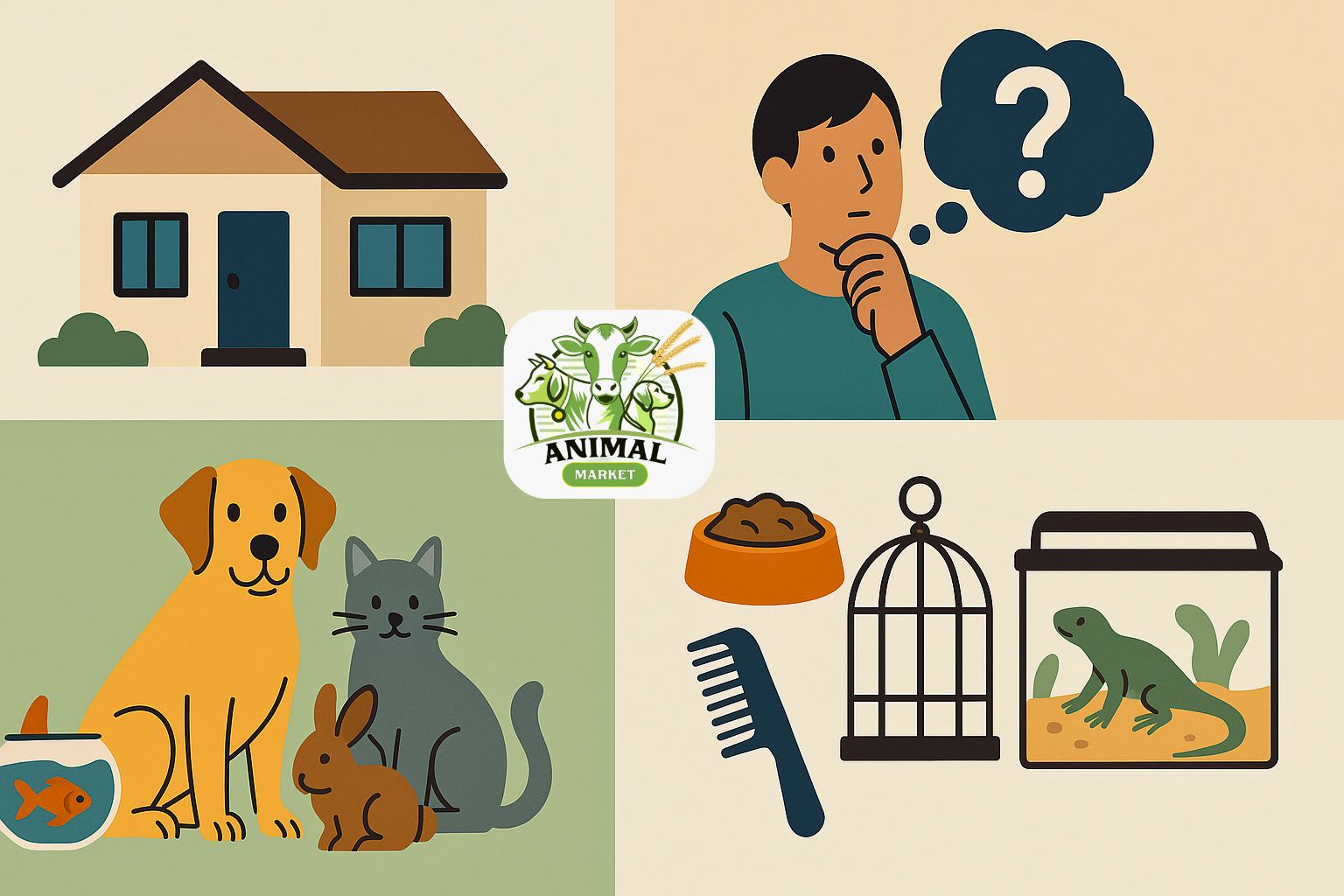
How to Choose the Right Pet for Your Lifestyle
<p><br></p><p>Choosing a pet is a big commitment that can bring joy, companionship, and responsibility. The key to a successful pet-owner relationship is choosing an animal that suits your personality, schedule, and living situation. Here’s a complete guide to help you make the best decision.</p><hr><h2>1. Assess Your Lifestyle</h2><h3>Living Space</h3><ul>
<li>
<p>If you live in an apartment or small home, go for pets that don't need much space to roam. Good choices include cats, small dogs, fish, hamsters, or birds.</p>
</li>
<li>
<p>If you have a house with a yard, you can consider larger pets such as medium or large dog breeds, outdoor rabbits, or even livestock (if you're in a rural area).</p>
</li>
</ul><h3>🕒 Time Commitment</h3><ul>
<li>
<p>If you’re busy or travel frequently, low-maintenance pets like fish, reptiles, or cats might be ideal.</p>
</li>
<li>
<p>If you work from home or have flexible hours, you can manage pets that require more attention, like dogs or birds.</p>
</li>
</ul><h3>Budget</h3><ul>
<li>
<p>Pets like fish, hamsters, or guinea pigs tend to be more budget-friendly.</p>
</li>
<li>
<p>Larger or more complex animals like dogs, parrots, or exotic pets can incur higher costs for food, grooming, vet care, and accessories.</p>
</li>
</ul><hr><h2>2. Consider Your Personality and Energy Level</h2><ul>
<li>
<p>If you’re active and enjoy outdoor activities, choose a high-energy dog breed like a Labrador or Border Collie that can keep up with you.</p>
</li>
<li>
<p>If you prefer a more peaceful, laid-back environment, pets like cats, rabbits, or calm dog breeds (like Basset Hounds or Bulldogs) may suit you.</p>
</li>
<li>
<p>If you’re nurturing and patient, consider raising a puppy, adopting a rescue animal, or caring for a parrot that needs training and bonding.</p>
</li>
<li>
<p>If you’re independent or introverted, cats, reptiles, or fish may be a good match, since they require less constant interaction.</p>
</li>
</ul><hr><h2>3. Think About Household Members</h2><h3>With Children</h3><p>Choose gentle, patient pets that are good with kids. Breeds like Golden Retrievers and Labradors, or small animals like guinea pigs and budgies, are often great choices.</p><h3>For Seniors</h3><p>Pets that are low-maintenance and affectionate — like small lap dogs or calm cats — are usually the best fit.</p><h3>With Other Pets</h3><p>Introduce new pets gradually and ensure they’re compatible. For example, don’t mix small prey animals with predatory pets.</p><hr><h2>4. Understand Maintenance Levels</h2><p>Some pets require more daily care than others. For example:</p><ul>
<li>
<p>Fish need regular feeding and occasional tank cleaning but are otherwise low effort.</p>
</li>
<li>
<p>Cats need feeding, litter box cleaning, and occasional grooming.</p>
</li>
<li>
<p>Dogs require regular walking, grooming, training, and attention.</p>
</li>
<li>
<p>Birds and reptiles need specialized care like cage or habitat cleaning and temperature control.</p>
</li>
<li>
<p>Rabbits need space to roam and a clean, safe environment.</p>
</li>
</ul><hr><h2>5. Do Your Research</h2><p>Before committing, take the time to understand the breed or species:</p><ul>
<li>
<p>Learn about their typical lifespan. For instance, parrots and turtles can live for decades.</p>
</li>
<li>
<p>Be aware of any common health problems and vet care needs.</p>
</li>
<li>
<p>Check local laws and regulations, especially for exotic pets, as some animals are restricted in certain areas.</p>
</li>
</ul><hr><h2>6. Adopt, Don’t Shop (If Possible)</h2><p>Animal shelters and rescue centers are full of wonderful pets waiting for loving homes. Adoption:</p><ul>
<li>
<p>Helps reduce the number of animals in shelters</p>
</li>
<li>
<p>Often includes basic veterinary care like vaccinations and spaying/neutering</p>
</li>
<li>
<p>Gives you a chance to adopt a pet with a known temperament and history</p>
</li>
</ul><hr><h2>Final Checklist</h2><p>Before you bring a pet home, ask yourself:</p><ul>
<li>
<p>Do I have enough time for daily care and bonding?</p>
</li>
<li>
<p>Can I afford the ongoing expenses of pet ownership?</p>
</li>
<li>
<p>Am I ready for the long-term commitment this pet requires?</p>
</li>
<li>
<p>Is my home environment suitable for the animal I’m considering?</p>
</li>
<li>
<p>Are all family or household members ready and supportive?</p>
</li>
</ul><hr><h2>Final Thoughts</h2><p>The best pet isn’t necessarily the cutest or most popular — it’s the one that fits your life. By honestly evaluating your time, budget, energy, and space, you’ll be able to make a thoughtful decision that benefits both you and your future pet. A well-matched pet brings joy, companionship, and a deeper connection to everyday life.</p><p><br></p>
<li>
<p>If you live in an apartment or small home, go for pets that don't need much space to roam. Good choices include cats, small dogs, fish, hamsters, or birds.</p>
</li>
<li>
<p>If you have a house with a yard, you can consider larger pets such as medium or large dog breeds, outdoor rabbits, or even livestock (if you're in a rural area).</p>
</li>
</ul><h3>🕒 Time Commitment</h3><ul>
<li>
<p>If you’re busy or travel frequently, low-maintenance pets like fish, reptiles, or cats might be ideal.</p>
</li>
<li>
<p>If you work from home or have flexible hours, you can manage pets that require more attention, like dogs or birds.</p>
</li>
</ul><h3>Budget</h3><ul>
<li>
<p>Pets like fish, hamsters, or guinea pigs tend to be more budget-friendly.</p>
</li>
<li>
<p>Larger or more complex animals like dogs, parrots, or exotic pets can incur higher costs for food, grooming, vet care, and accessories.</p>
</li>
</ul><hr><h2>2. Consider Your Personality and Energy Level</h2><ul>
<li>
<p>If you’re active and enjoy outdoor activities, choose a high-energy dog breed like a Labrador or Border Collie that can keep up with you.</p>
</li>
<li>
<p>If you prefer a more peaceful, laid-back environment, pets like cats, rabbits, or calm dog breeds (like Basset Hounds or Bulldogs) may suit you.</p>
</li>
<li>
<p>If you’re nurturing and patient, consider raising a puppy, adopting a rescue animal, or caring for a parrot that needs training and bonding.</p>
</li>
<li>
<p>If you’re independent or introverted, cats, reptiles, or fish may be a good match, since they require less constant interaction.</p>
</li>
</ul><hr><h2>3. Think About Household Members</h2><h3>With Children</h3><p>Choose gentle, patient pets that are good with kids. Breeds like Golden Retrievers and Labradors, or small animals like guinea pigs and budgies, are often great choices.</p><h3>For Seniors</h3><p>Pets that are low-maintenance and affectionate — like small lap dogs or calm cats — are usually the best fit.</p><h3>With Other Pets</h3><p>Introduce new pets gradually and ensure they’re compatible. For example, don’t mix small prey animals with predatory pets.</p><hr><h2>4. Understand Maintenance Levels</h2><p>Some pets require more daily care than others. For example:</p><ul>
<li>
<p>Fish need regular feeding and occasional tank cleaning but are otherwise low effort.</p>
</li>
<li>
<p>Cats need feeding, litter box cleaning, and occasional grooming.</p>
</li>
<li>
<p>Dogs require regular walking, grooming, training, and attention.</p>
</li>
<li>
<p>Birds and reptiles need specialized care like cage or habitat cleaning and temperature control.</p>
</li>
<li>
<p>Rabbits need space to roam and a clean, safe environment.</p>
</li>
</ul><hr><h2>5. Do Your Research</h2><p>Before committing, take the time to understand the breed or species:</p><ul>
<li>
<p>Learn about their typical lifespan. For instance, parrots and turtles can live for decades.</p>
</li>
<li>
<p>Be aware of any common health problems and vet care needs.</p>
</li>
<li>
<p>Check local laws and regulations, especially for exotic pets, as some animals are restricted in certain areas.</p>
</li>
</ul><hr><h2>6. Adopt, Don’t Shop (If Possible)</h2><p>Animal shelters and rescue centers are full of wonderful pets waiting for loving homes. Adoption:</p><ul>
<li>
<p>Helps reduce the number of animals in shelters</p>
</li>
<li>
<p>Often includes basic veterinary care like vaccinations and spaying/neutering</p>
</li>
<li>
<p>Gives you a chance to adopt a pet with a known temperament and history</p>
</li>
</ul><hr><h2>Final Checklist</h2><p>Before you bring a pet home, ask yourself:</p><ul>
<li>
<p>Do I have enough time for daily care and bonding?</p>
</li>
<li>
<p>Can I afford the ongoing expenses of pet ownership?</p>
</li>
<li>
<p>Am I ready for the long-term commitment this pet requires?</p>
</li>
<li>
<p>Is my home environment suitable for the animal I’m considering?</p>
</li>
<li>
<p>Are all family or household members ready and supportive?</p>
</li>
</ul><hr><h2>Final Thoughts</h2><p>The best pet isn’t necessarily the cutest or most popular — it’s the one that fits your life. By honestly evaluating your time, budget, energy, and space, you’ll be able to make a thoughtful decision that benefits both you and your future pet. A well-matched pet brings joy, companionship, and a deeper connection to everyday life.</p><p><br></p>