


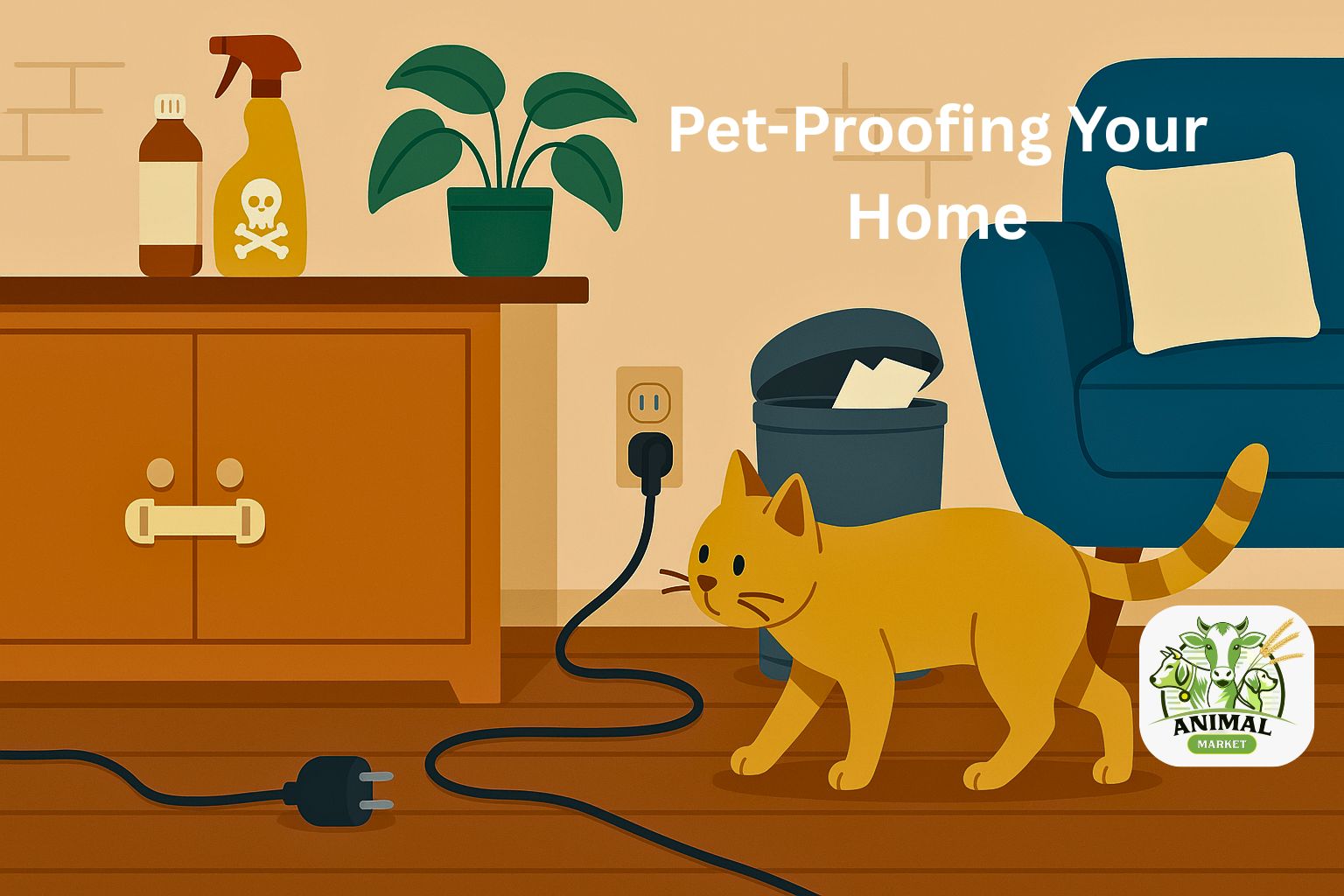
Pet-Proofing Your Home
<p><span style="color: rgb(55, 73, 72); font-family: Questrial, sans-serif; font-size: 3.052em; font-weight: 600;">Pet-Proofing Your Home: Safety Tips for New Owners</span></p><p>Bringing a new pet into your home is an exciting and heart-warming experience. Whether you're adopting a curious kitten, an energetic puppy, or an older rescue animal, your home should be a safe and welcoming environment. Just like baby-proofing a house for a toddler, pet-proofing ensures that your furry friend stays safe, happy, and healthy.</p><p>Here are some essential safety tips for new pet owners to help you pet-proof your home effectively.</p><hr><h2>1. <strong>Secure Hazardous Chemicals</strong></h2><p>Pets are naturally curious and may sniff or chew anything within reach. Keep all cleaning products, pesticides, medications, and other chemicals in locked cabinets or high shelves. Even items like antifreeze or laundry detergent pods can be extremely toxic.</p><p><strong>Tip:</strong> Use childproof locks for cabinets and label all bottles clearly.</p><hr><h2>2. <strong>Hide Electrical Cords</strong></h2><p>Chewing on electrical cords is a common hazard, especially for puppies and kittens. This can result in serious injury or fire.</p><p><strong>Solutions:</strong></p><ul>
<li>
<p>Use cord covers or PVC tubing.</p>
</li>
<li>
<p>Tape cords along walls or behind furniture.</p>
</li>
<li>
<p>Unplug devices when not in use.</p>
</li>
</ul><hr><h2>3. <strong>Remove Poisonous Plants</strong></h2><p>Some common houseplants, like lilies, philodendrons, and pathos, are toxic to pets if ingested. Research each plant in your home and replace harmful ones with pet-safe alternatives like spider plants or bamboo palms.</p><hr><h2>4. <strong>Keep Small Objects Out of Reach</strong></h2><p>Items such as rubber bands, hair ties, jewellery, batteries, and children's toys can be choking hazards. Make a habit of picking up anything small from the floor or low surfaces.</p><hr><h2>5. <strong>Secure Trash and Food</strong></h2><p>The smell of garbage or human food can be irresistible to pets. However, ingesting spoiled food, bones, or certain ingredients (like chocolate or xylitol) can be dangerous.</p><p><strong>How to secure:</strong></p><ul>
<li>
<p>Use a lidded or pet-proof trash can.</p>
</li>
<li>
<p>Store pantry items in sealed containers.</p>
</li>
<li>
<p>Never leave food unattended on counters.</p>
</li>
</ul><hr><h2>6. <strong>Protect Your Furniture and Belongings</strong></h2><p>To discourage scratching, chewing, or accidents:</p><ul>
<li>
<p>Provide plenty of toys and scratching posts.</p>
</li>
<li>
<p>Use deterrent sprays on furniture.</p>
</li>
<li>
<p>Cover furniture with washable throws during the early adjustment period.</p>
</li>
</ul><hr><h2>7. <strong>Check for Escape Routes</strong></h2><p>Before bringing your pet home, inspect all windows, doors, and screens. Fix any holes in fencing or loose screens that could allow your pet to escape.</p><p><strong>Bonus Tip:</strong> Microchip and tag your pet with your contact information as a backup.</p><hr><h2>8. <strong>Designate a Pet-Safe Zone</strong></h2><p>Create a quiet, comfortable area where your pet can relax and feel secure. Use baby gates to restrict access to rooms until your pet is fully trained.</p><hr><h2>9. <strong>Mind the Toilet, Washer, and Dryer</strong></h2><p>Cats especially may explore tight spaces or try to drink from the toilet bowl. Always keep toilet lids closed and check appliances before use.</p><hr><h2>10. <strong>Be Aware of Temperature and Ventilation</strong></h2><p>Make sure your pet’s sleeping area is not too hot or cold, and that there's good airflow. Never leave pets in closed spaces like cars, garages, or unventilated rooms.</p><hr><h2>Final Thoughts</h2><p>Pet-proofing isn’t a one-time task—it’s an ongoing effort. As your pet grows and their behaviour changes, continue adjusting your home to suit their needs. Taking the time to make your environment safe will help your new companion feel at home and thrive in their new surroundings.</p><p><strong>Your pet relies on you. A safe home is the first step to a happy life together.</strong></p>
<li>
<p>Use cord covers or PVC tubing.</p>
</li>
<li>
<p>Tape cords along walls or behind furniture.</p>
</li>
<li>
<p>Unplug devices when not in use.</p>
</li>
</ul><hr><h2>3. <strong>Remove Poisonous Plants</strong></h2><p>Some common houseplants, like lilies, philodendrons, and pathos, are toxic to pets if ingested. Research each plant in your home and replace harmful ones with pet-safe alternatives like spider plants or bamboo palms.</p><hr><h2>4. <strong>Keep Small Objects Out of Reach</strong></h2><p>Items such as rubber bands, hair ties, jewellery, batteries, and children's toys can be choking hazards. Make a habit of picking up anything small from the floor or low surfaces.</p><hr><h2>5. <strong>Secure Trash and Food</strong></h2><p>The smell of garbage or human food can be irresistible to pets. However, ingesting spoiled food, bones, or certain ingredients (like chocolate or xylitol) can be dangerous.</p><p><strong>How to secure:</strong></p><ul>
<li>
<p>Use a lidded or pet-proof trash can.</p>
</li>
<li>
<p>Store pantry items in sealed containers.</p>
</li>
<li>
<p>Never leave food unattended on counters.</p>
</li>
</ul><hr><h2>6. <strong>Protect Your Furniture and Belongings</strong></h2><p>To discourage scratching, chewing, or accidents:</p><ul>
<li>
<p>Provide plenty of toys and scratching posts.</p>
</li>
<li>
<p>Use deterrent sprays on furniture.</p>
</li>
<li>
<p>Cover furniture with washable throws during the early adjustment period.</p>
</li>
</ul><hr><h2>7. <strong>Check for Escape Routes</strong></h2><p>Before bringing your pet home, inspect all windows, doors, and screens. Fix any holes in fencing or loose screens that could allow your pet to escape.</p><p><strong>Bonus Tip:</strong> Microchip and tag your pet with your contact information as a backup.</p><hr><h2>8. <strong>Designate a Pet-Safe Zone</strong></h2><p>Create a quiet, comfortable area where your pet can relax and feel secure. Use baby gates to restrict access to rooms until your pet is fully trained.</p><hr><h2>9. <strong>Mind the Toilet, Washer, and Dryer</strong></h2><p>Cats especially may explore tight spaces or try to drink from the toilet bowl. Always keep toilet lids closed and check appliances before use.</p><hr><h2>10. <strong>Be Aware of Temperature and Ventilation</strong></h2><p>Make sure your pet’s sleeping area is not too hot or cold, and that there's good airflow. Never leave pets in closed spaces like cars, garages, or unventilated rooms.</p><hr><h2>Final Thoughts</h2><p>Pet-proofing isn’t a one-time task—it’s an ongoing effort. As your pet grows and their behaviour changes, continue adjusting your home to suit their needs. Taking the time to make your environment safe will help your new companion feel at home and thrive in their new surroundings.</p><p><strong>Your pet relies on you. A safe home is the first step to a happy life together.</strong></p>