


How to Increase Milk Production in Your Cow or Buffalo Naturally
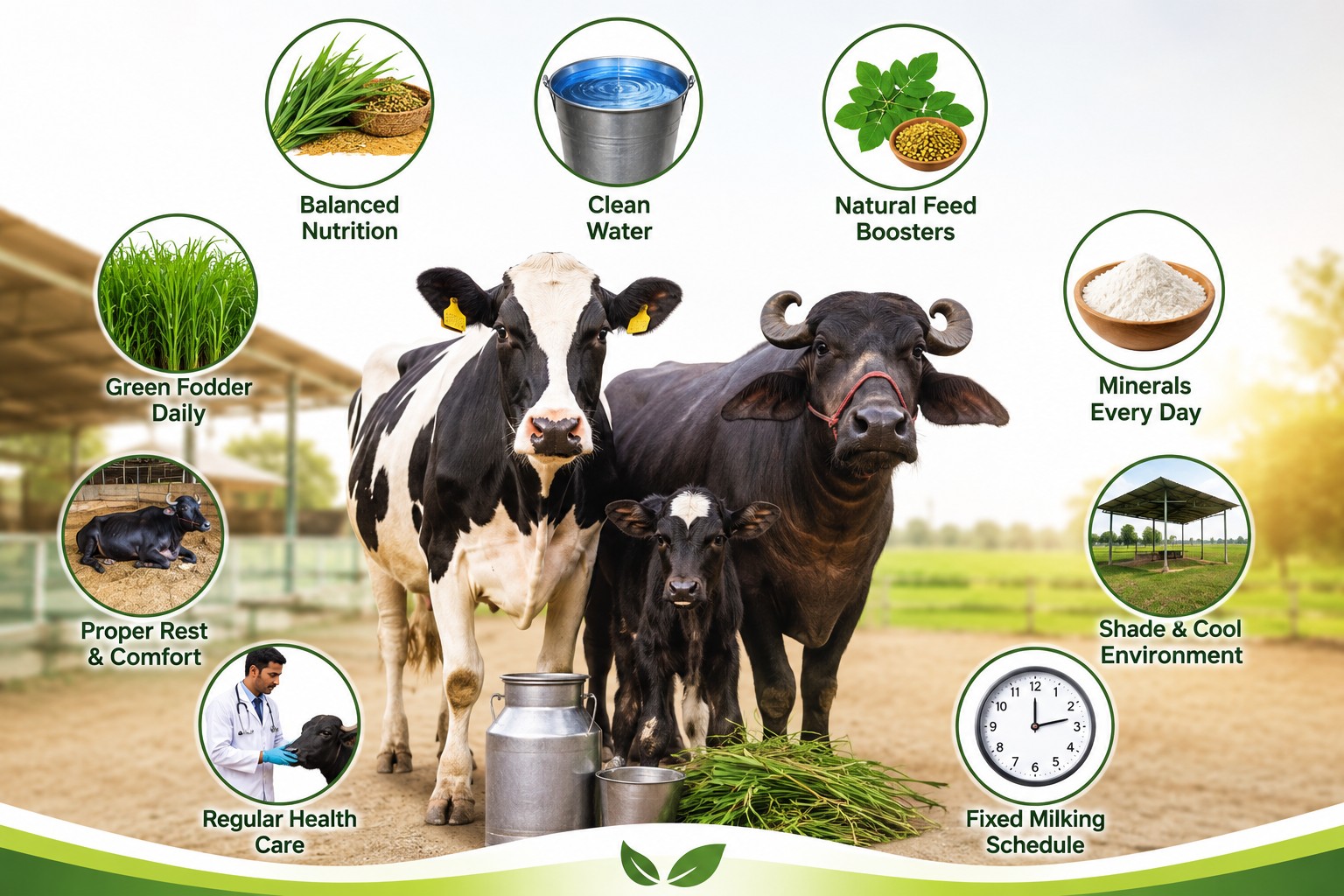
<h1><br></h1><p>Every dairy farmer dreams of getting more milk from their cows and buffaloes. However, increasing milk production doesn't always require expensive supplements or medicines. With proper nutrition, good management practices, and natural care, you can significantly improve your animal's milk yield while keeping it healthy and productive.</p><p>Let's explore the best natural ways to increase milk production.</p><h2>1. Provide a Balanced Diet</h2><p>Milk production starts with nutrition. An animal cannot produce quality milk without receiving enough nutrients.</p><p>A balanced diet should include:</p><ul><li><p>Green fodder such as Napier grass, maize, sorghum, or lucerne</p></li><li><p>Dry fodder like wheat straw or paddy straw</p></li><li><p>Concentrate feed rich in protein and energy</p></li><li><p>Mineral mixture and salt</p></li></ul><p>Protein is especially important during lactation, as it directly supports milk production.</p><h2>2. Always Ensure Clean Drinking Water</h2><p>Milk contains nearly 85% water. If your cow or buffalo does not drink enough clean water, milk production can decrease quickly.</p><p>Always provide:</p><ul><li><p>Fresh drinking water</p></li><li><p>Unlimited access throughout the day</p></li><li><p>Clean water containers</p></li></ul><p>A high-yielding buffalo may drink over 80 liters of water daily during summer.</p><h2>3. Feed Green Fodder Daily</h2><p>Fresh green fodder supplies essential vitamins, minerals, and natural energy.</p><p>Good choices include:</p><ul><li><p>Hybrid Napier grass</p></li><li><p>CO-4 grass</p></li><li><p>Maize fodder</p></li><li><p>Berseem</p></li><li><p>Lucerne</p></li></ul><p>Regular green fodder feeding helps improve digestion and milk yield naturally.</p><h2>4. Include Natural Milk Boosting Ingredients</h2><p>Many experienced dairy farmers use traditional natural supplements.</p><p>These include:</p><ul><li><p>Moringa leaves</p></li><li><p>Fenugreek seeds</p></li><li><p>Cottonseed cake</p></li><li><p>Groundnut cake</p></li><li><p>Mustard oil cake</p></li><li><p>Flaxseed</p></li><li><p>Jaggery mixed with bran in small quantities</p></li></ul><p>These should be given in moderation and as part of a balanced diet.</p><h2>5. Never Skip Mineral Mixture</h2><p>Many animals suffer from hidden mineral deficiencies.</p><p>Calcium, phosphorus, zinc, and other trace minerals are essential for:</p><ul><li><p>Better milk production</p></li><li><p>Improved fertility</p></li><li><p>Strong bones</p></li><li><p>Better immunity</p></li></ul><p>Adding a recommended mineral mixture daily often improves milk yield over time.</p><h2>6. Reduce Heat Stress</h2><p>Summer heat can reduce milk production by 10–30%.</p><p>Protect animals by:</p><ul><li><p>Providing shade</p></li><li><p>Using fans or sprinklers</p></li><li><p>Bathing buffaloes regularly</p></li><li><p>Ensuring proper ventilation</p></li></ul><p>Keeping animals cool helps maintain appetite and milk production.</p><h2>7. Follow a Fixed Milking Schedule</h2><p>Milk your animal at the same time every day.</p><p>Consistency helps stimulate milk secretion and reduces stress.</p><p>Always:</p><ul><li><p>Wash the udder before milking</p></li><li><p>Use clean hands and utensils</p></li><li><p>Milk gently and completely</p></li></ul><p>Poor milking practices can reduce overall yield.</p><h2>8. Control Parasites and Diseases</h2><p>Internal worms and external parasites reduce nutrient absorption and weaken animals.</p><p>Regular:</p><ul><li><p>Deworming</p></li><li><p>Vaccination</p></li><li><p>Veterinary checkups</p></li><li><p>Tick control</p></li></ul><p>can help maintain consistent milk production.</p><h2>9. Allow Enough Rest</h2><p>Just like humans, dairy animals need proper rest.</p><p>Provide:</p><ul><li><p>Clean bedding</p></li><li><p>Dry flooring</p></li><li><p>Comfortable shelter</p></li><li><p>Adequate space to lie down</p></li></ul><p>Stress-free animals produce more milk.</p><h2>10. Maintain Good Body Condition</h2><p>An animal that is too thin or overweight usually produces less milk.</p><p>Monitor body condition regularly and adjust feeding accordingly.</p><p>Healthy animals naturally perform better.</p><h2>Foods That Can Naturally Support Milk Production</h2><p>Some commonly used natural feed ingredients include:</p><ul><li><p>Green fodder</p></li><li><p>Moringa leaves</p></li><li><p>Cottonseed cake</p></li><li><p>Groundnut cake</p></li><li><p>Mustard cake</p></li><li><p>Fenugreek seeds</p></li><li><p>Mineral mixture</p></li><li><p>Rice bran</p></li><li><p>Wheat bran</p></li><li><p>Oilseed cakes</p></li></ul><p>Always introduce new feeds gradually and maintain a balanced ration.</p><h2>Common Mistakes Farmers Make</h2><p>Avoid these mistakes:</p><ul><li><p>Feeding only dry straw</p></li><li><p>Not providing enough water</p></li><li><p>Irregular milking times</p></li><li><p>Ignoring mineral supplements</p></li><li><p>Overfeeding concentrates</p></li><li><p>Poor hygiene during milking</p></li><li><p>Delaying disease treatment</p></li></ul><p>Correcting these simple mistakes can improve milk production naturally.</p><h2>Final Thoughts</h2><p>Increasing milk production naturally is a combination of proper feeding, clean water, regular healthcare, stress management, and good dairy practices. There is no magic feed that instantly increases milk yield, but consistent care and balanced nutrition can make a noticeable difference over time.</p><p>Healthy cows and buffaloes are the foundation of a profitable dairy farm. Invest in their nutrition and well-being, and they will reward you with better milk production and a longer productive life.</p>