


Organic Fertilizers You Can Make at Home for Free
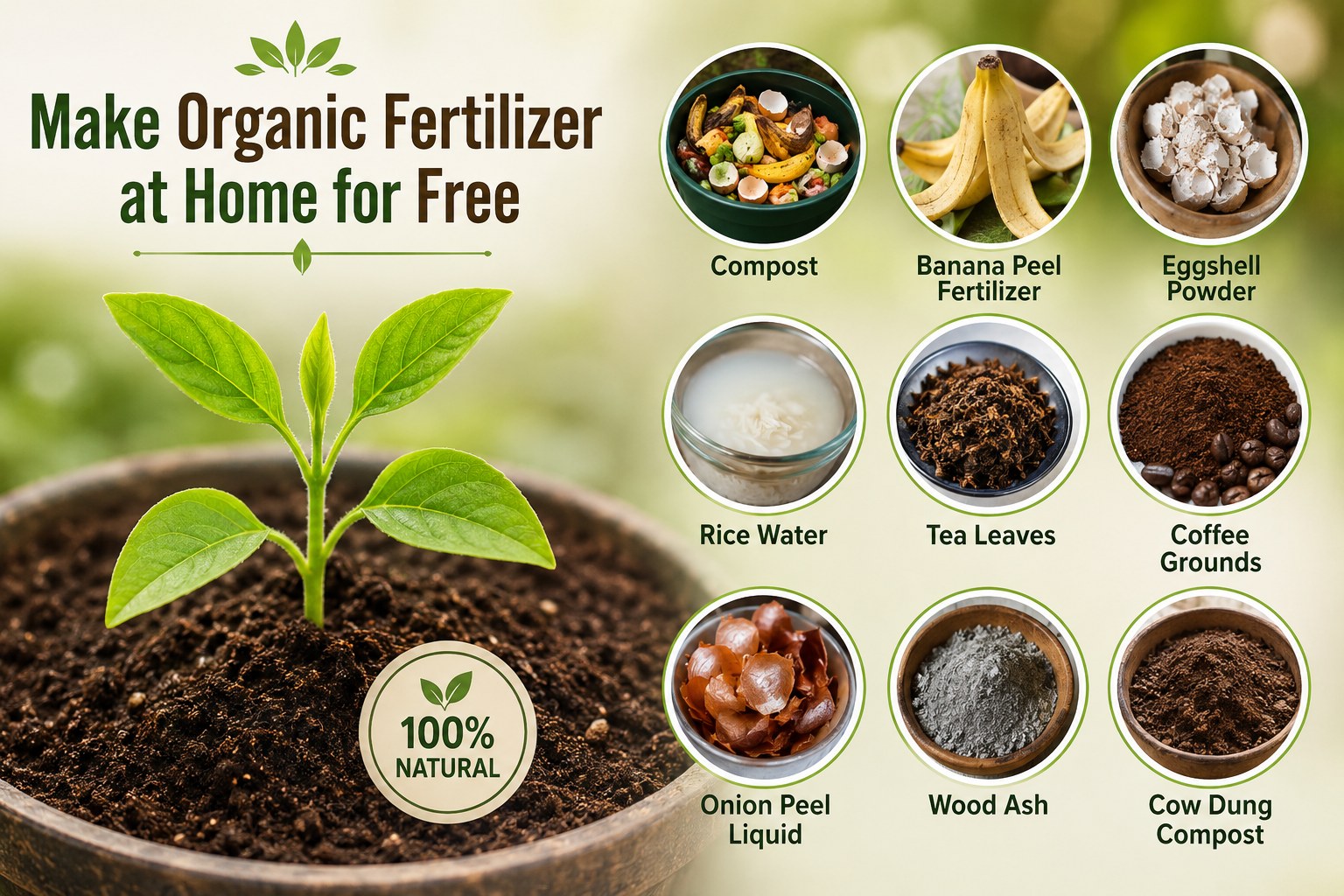
<h1>Organic Fertilizers You Can Make at Home for Free</h1><h2>Turn Your Kitchen Waste into Garden Gold</h2><p>If you love gardening or growing your own vegetables, you don't need to spend money on expensive fertilizers. In fact, some of the best plant food is probably sitting in your kitchen right now.</p><p>Every day, we throw away banana peels, vegetable scraps, eggshells, tea leaves, and other organic waste without realizing how valuable they are for our plants. Instead of sending them to the dustbin, you can turn them into nutrient-rich organic fertilizer that costs absolutely nothing.</p><p>Not only does this save money, but it also improves soil health, reduces household waste, and helps grow healthier plants naturally.</p><p>Here are some easy homemade fertilizers that anyone can make.</p><h2>1. Compost – The Best Free Fertilizer</h2><p>Compost is often called "black gold" by gardeners, and for good reason. It's packed with nutrients and beneficial microbes that help plants thrive.</p><p>You can make compost using vegetable peels, fruit waste, tea leaves, coffee grounds, dry leaves, and even shredded paper.</p><p>Simply collect these materials in a container, keep them slightly moist, and turn them once every week. In about two months, you'll have rich compost that smells like fresh soil.</p><p>Your plants will love it.</p><h2>2. Banana Peel Fertilizer</h2><p>Don't throw away banana peels after eating a banana.</p><p>They are rich in potassium, which helps plants produce more flowers and fruits.</p><p>Just cut the peels into small pieces and soak them in water for two or three days. Use this water to water your plants.</p><p>You can also dry the peels, grind them into powder, and mix them into the soil.</p><p>This works especially well for tomatoes, roses, chillies, and flowering plants.</p><h2>3. Eggshell Powder for Stronger Plants</h2><p>Eggshells are full of calcium, an important nutrient for healthy plant growth.</p><p>Wash the shells, let them dry, and crush them into a fine powder. Mix the powder into your garden soil or flower pots.</p><p>It strengthens roots and helps prevent calcium deficiency in vegetables like tomatoes.</p><h2>4. Rice Water – A Simple Plant Booster</h2><p>The water left after washing rice contains minerals and starch that feed beneficial microorganisms in the soil.</p><p>Instead of pouring it down the sink, let it rest for a few hours and use it to water your plants.</p><p>It's one of the easiest ways to recycle kitchen waste.</p><h2>5. Used Tea Leaves</h2><p>If you drink tea every day, don't waste the tea leaves.</p><p>After washing away sugar or milk residue, mix them into the soil or compost pile.</p><p>Tea leaves improve soil texture and slowly release nutrients that help leafy plants grow better.</p><h2>6. Coffee Grounds</h2><p>Used coffee powder is rich in nitrogen, making it great for leafy vegetables and ornamental plants.</p><p>Just sprinkle a small amount around the base of the plant and mix it lightly into the soil.</p><p>Remember, a little goes a long way.</p><h2>7. Onion Peel Liquid Fertilizer</h2><p>Onion peels are often overlooked, but they're surprisingly useful.</p><p>Soak them in water overnight and use the strained liquid to water your plants.</p><p>It provides micronutrients that encourage healthy growth.</p><h2>8. Wood Ash</h2><p>If your home uses firewood for cooking or heating, save the ash instead of throwing it away.</p><p>Wood ash contains potassium and calcium, both essential for flowering and fruit production.</p><p>Use it sparingly because too much can make the soil alkaline.</p><h2>9. Cow Dung Compost</h2><p>For generations, Indian farmers have relied on well-decomposed cow dung to enrich their fields.</p><p>Once fully composted, it improves soil fertility, supports beneficial microbes, and releases nutrients slowly over time.</p><p>Avoid using fresh cow dung directly on plants.</p><h2>10. Dry Leaves Compost</h2><p>Every autumn or summer, piles of dry leaves end up being burned or discarded.</p><p>Instead, collect them and mix them with kitchen waste to create leaf compost.</p><p>This natural fertilizer improves soil structure and helps retain moisture, making it ideal for vegetable gardens.</p><h2>Why Homemade Organic Fertilizers Are Worth It</h2><p>Using homemade fertilizers isn't just about saving money.</p><p>They make the soil healthier year after year, encourage earthworms and beneficial microbes, reduce pollution, and produce vegetables that are safer to eat.</p><p>Most importantly, you're recycling waste that would otherwise end up in landfills.</p><p>It's a simple habit that benefits both your garden and the environment.</p><h2>A Few Simple Tips</h2><ul><li><p>Apply organic fertilizer once every 3–4 weeks.</p></li><li><p>Water plants after adding compost or fertilizer.</p></li><li><p>Don't overuse any single fertilizer.</p></li><li><p>Mix different organic materials for balanced nutrition.</p></li><li><p>Keep compost moist but not waterlogged.</p></li></ul>